The Environment

There exists a great polarization in America about how the people view, use, and aim to protect the environment. I know relatively little about the nature of this polarization however, it is my understanding, as someone who was raised in liberal Bay Area, that liberals tend to take a stance in which they ultimately try and protect the environment, advocating for policy that is made to ensure a sustainable future (even if this entails spending a lot of money). Conservatives, on the other hand, tend to focus more on the relationship between the environment and the economy and prioritize the well-being of the economy over that of the environment.
In this post, I will be comparing the point of views of two different environment interest groups, one liberal and the other conservative, that promote very different agendas. The liberal group is the Union for Concerned Scientists (UCS) and the conservative group is the Institute for Energy Research (IER).

The UCS is a non-profit organization that claims to "put rigorous science to work to build a healthier planet and a safer world." Their goal is to use science to solve a myriad of problems including global warming, food, power, and transportation shortages, misinformation, racial inequity, and the threat of nuclear war.

The IER is a non-profit organization that claims to conduct "intensive research and analysis on the functions, operations, and government regulation of global energy markets." The IER argues that the best way to solve the world'd energy and environment problems is through "free-functioning energy markets..."
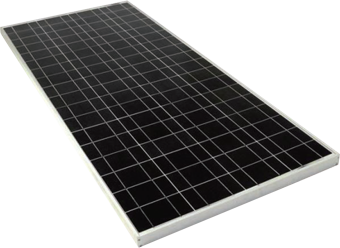
To really understand both interest groups, I am going to deconstruct an article about solar energy from each. In an analysis of each, I will explore the point of view, the authorial intentions, the rhetoric used and its legitimacy, any biases I see, and lastly, any limitations I identify.
Here is an article from the UCS about the why the growing use of solar energy is America is a good thing. The main ideas are that solar energy is beginning to be increasingly used in the US and that this is "exciting". Clearly, the UCS supports the use of solar energy and ultimately, they believe that it will be good for our country to migrate towards this "clean" energy source in the long term. The article ends with a call to action for readers to take up the pro-solar cause.
The article obviously has a pro-solar energy point of view/bias. The way the author speaks of solar energy indicates that he, and by extension the rest of the UCS, favors the growth of the American solar industry. The article's rhetoric was relatively weak: while the author did include good data on the spread of solar energy, he did not really elaborate as to why this might be a good thing. It was as if he wrote this not to convince readers to take a pro-solar stance, but rather, to excite readers that already held this view. In this sense, there is a great limitation in this article that could only have been remedied by proving to me why going solar is a good idea for the country.
Here is an article from the IER about why using solar panels on a large scale could have negative long-term impacts on the environment. The main argument is that the widespread use of solar panels could end up harming the environment in the long term because of the great amount of waste (reportedly far greater than waste produced from nuclear energy) that would be created when the panels reach the end of their lives. Most places that use solar, namely "China" and "California", have no plan for what to do with this waste and to make matters worse, the panels will be "difficult to recycle" because they are manufactured with "hazardous materials". Another concern is that if recycled like other e-waste, solar panels could pollute drinking water supplies in their proximity. Lastly, while improving solar technology does reduce carbon dioxide emissions, it increases emission of a greenhouse gas far more dangerous than carbon dioxide: nitrogen trifluoride. The article concludes that there are many misconceptions about the merit of solar technology in its ability to save the environment.
This article holds an anti-solar energy point of view/bias; this is made clear because the main intention of this article was to discredit potentially dangerous misconceptions about the why using solar energy would be good for the planet. This article contained very strong rhetoric. It employed the use of empirical data that directly showed why using solar energy, as opposed to, say, nuclear energy, could be very harmful to the planet in the long term. Furthermore, the article also addressed the claim many scientists make that using solar energy will have a net positive impact on the environment in the future. I suppose that a limitation of the article would be that they did not address as much evidence in opposition to their argument as they used in favor of their argument however, I really cannot assert that there were any significant limitations.
If one similarity between these two interests groups is clear to me, it is that they both intend to protect the environment, use clean energy, and ensure that earth has a sustainable future; I'd like to note that this is antithetical to how I had perceived conservatives when it comes to the environment. For groups that ultimately share similar ambitions, it is interesting that they ended up differing so greatly when it comes to solar. The liberal group is pro-solar whereas on the other hand, the conservative group is anti-solar.
If I had to side with one group at this point (having only read each group's "about" section and an article from each) I would side with the IER. The IER has convinced me that at the very least, there are serious misconceptions regarding the merit of solar energy and at most, that solar energy will be terrible for the health of the planet and various drinking water supplies. In my opinion, UCS did not have a very compelling article and should have used more relevant empirical data. With this said, I cannot say that I would pledge my trust to either group meaning that neither of them really swayed my overall political beliefs all that much (except with regards to solar energy).

Cool to see you are open to new ideas
ReplyDeleteI like how you are willing to adapt your ideas despite your already semi side on this issue. Nice blog mang
ReplyDeleteGood job keeping a open mind.
ReplyDeleteI like the environment and I like this post you did good on comparing the two sources
ReplyDeleteI like the openness in your point of view. Also very interesting topic!
ReplyDelete